Rate Rules
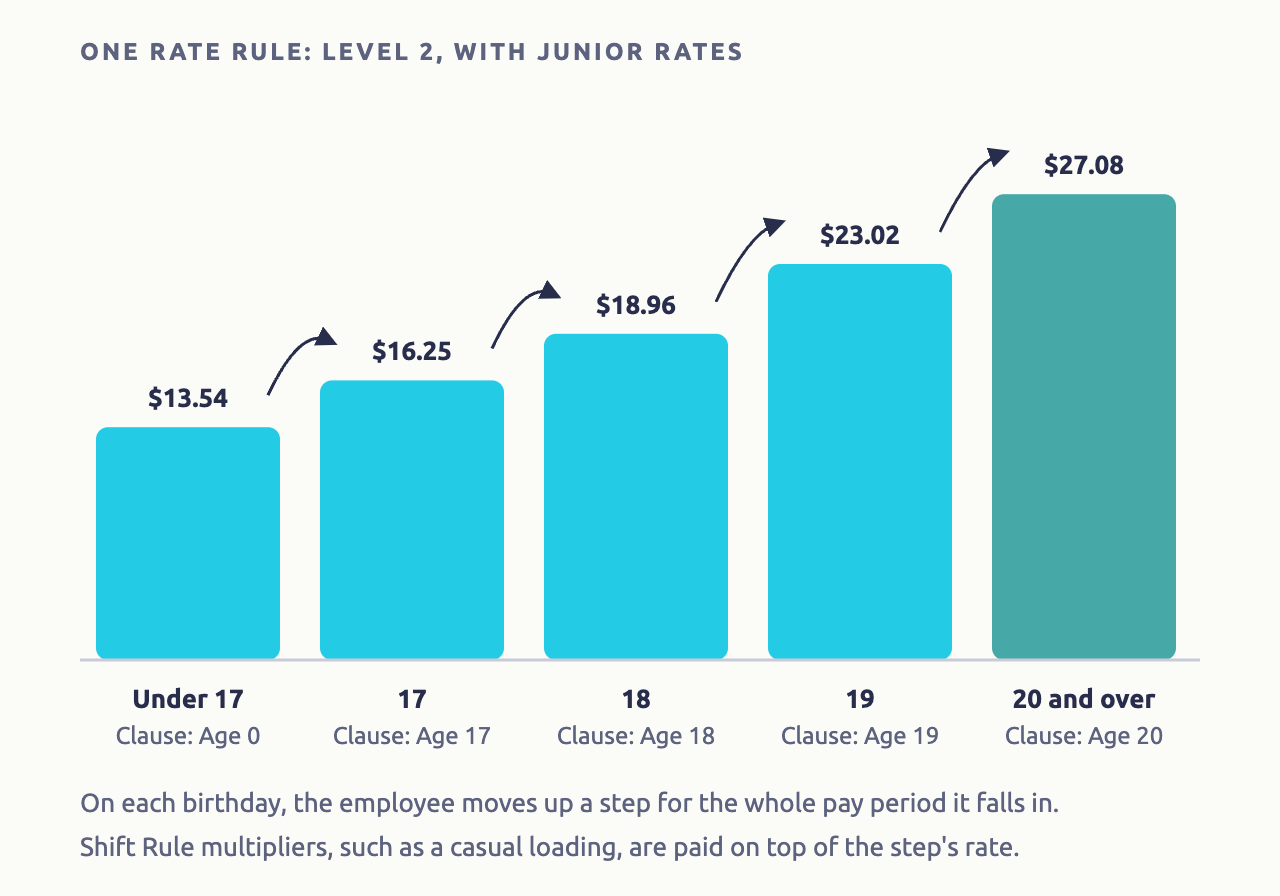
A Rate Rule sets an employee's base hourly rate, such as the rate for one award level. Its clauses give a different rate by age, years of service or Job, so a junior's rate goes up on their birthday without you changing their profile. Shift Rule multipliers, such as a casual loading, are paid on top of the Rate Rule's rate.
| Required plan | All plans |
|---|---|
| Required access | Settings and Payroll - Full Access |
Navigate to Menu > Settings > Payroll Rules > Rate Rules.
When to use Rate Rules
- Award levels: with many staff on the same level, give each level a Rate Rule. When award rates rise on 1 July, you update each level once instead of every profile.
- Junior rates: a clause for each age moves a junior to the next rate automatically.
- Years of service: a clause for each year of employment, for agreements that pay more with experience.
- A rate for a Job: a clause for a Job pays a different rate when a shift is worked on it.
Each employee can have one Rate Rule. Staff without one are paid the hourly rate on their profile.
Create a Rate Rule
- Click Create Rate Rule.
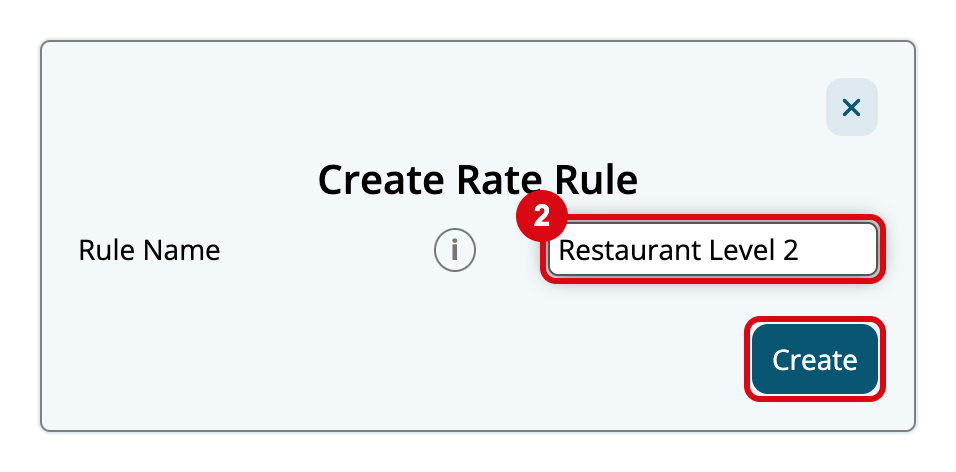
- Enter a Rule Name, such as "Restaurant Level 2", and click Create.
- Under the new rule, click Add Clause.
- Enter the Age and Duration the clause needs, or 0 for either if it doesn't matter.
- Enter the hourly Rate, such as "27.08".
- Click Add Clause. Repeat for each rate.
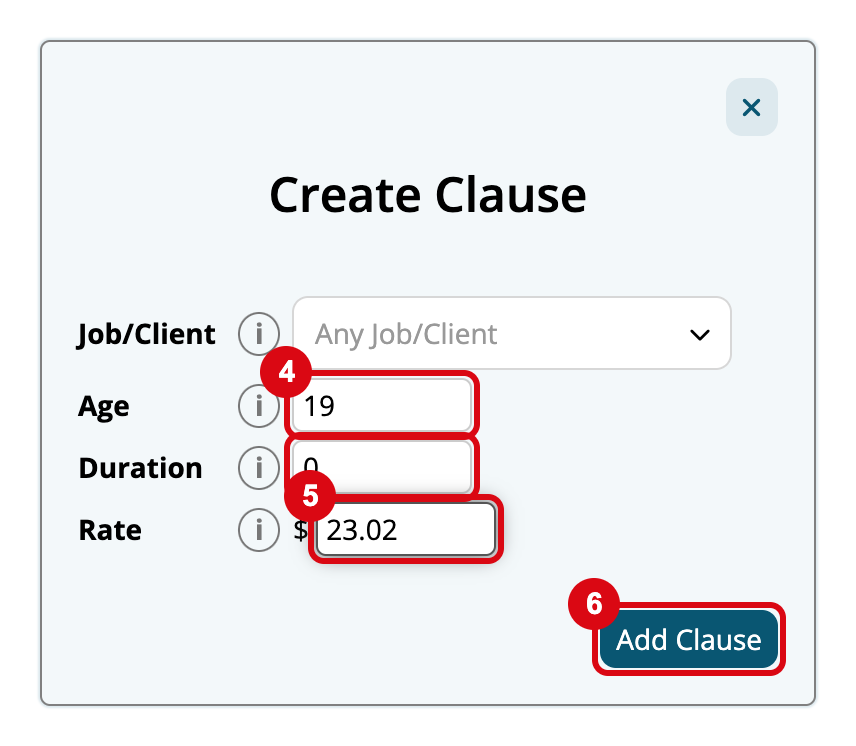
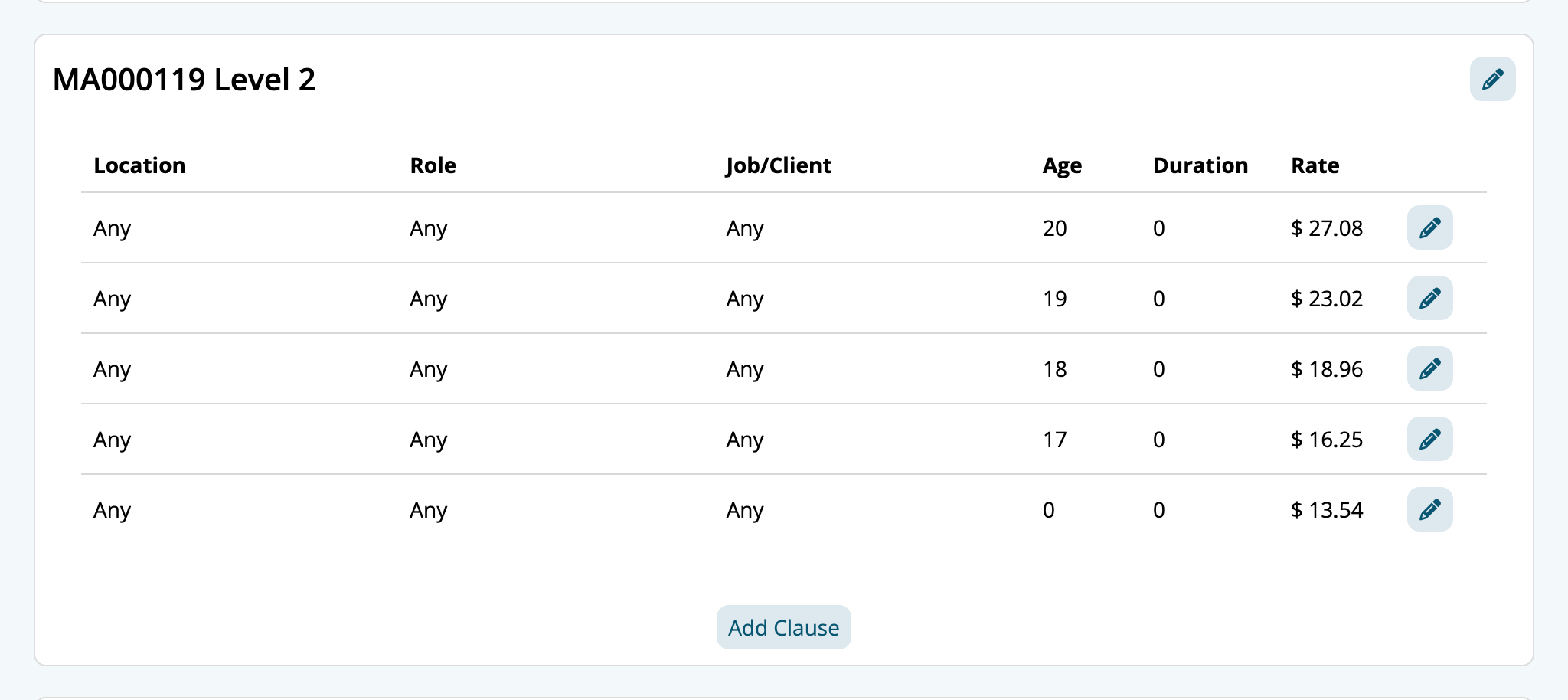
Every Rate Rule needs a clause with Age 0 and Duration 0. It's the rate for anyone who doesn't match another clause, such as an adult with no date of birth entered.
Set junior rates by age
Add a clause for each age with its rate, and one with Age 0 for the youngest. For example, for Level 2 of the Restaurant Industry Award from 1 July 2026:
| Age | Duration | Rate | Paid to |
|---|---|---|---|
| 20 | 0 | 27.08 | 20 and over |
| 19 | 0 | 23.02 | 19 |
| 18 | 0 | 18.96 | 18 |
| 17 | 0 | 16.25 | 17 |
| 0 | 0 | 13.54 | Under 17 |
Age is worked out on the last day of the pay period, so a birthday in a pay period pays the new rate for the whole period. Make sure each junior's Date of Birth on their profile is right.
Enter each junior rate in dollars, and update them whenever the adult rate changes.
Set rates by years of service
Enter the years of employment in Duration, such as "1" or "3". Use decimals for part of a year: "0.5" is 6 months. Years are counted from the employee's Start Date, on the last day of the pay period.
For example, $25 for the first year, $26.50 from 1 year and $28 from 3 years:
| Age | Duration | Rate |
|---|---|---|
| 0 | 3 | 28.00 |
| 0 | 1 | 26.50 |
| 0 | 0 | 25.00 |
Pay a different rate for a Job
If you use Jobs, choose one or more under Job/Client in a clause. The clause's rate is paid for shifts worked on those Jobs. Choosing a Client includes all of that Client's Jobs.
For a rate by Job, make a Rate Rule with only Job clauses, each with Age 0 and Duration 0. Shifts on other Jobs are paid the hourly rate on the employee's profile.
Warning
Clauses are checked from the highest Age down, then the highest Duration, and the first one the employee matches is used. A Job doesn't make a clause come first, so don't mix Job clauses with age or service clauses in one Rate Rule.
Put an employee on a Rate Rule
- Navigate to Menu > Settings > Employees, and click Edit on the employee.
- Under Payment and Employment, choose the rule under Rate Rule. It saves as soon as you choose it.
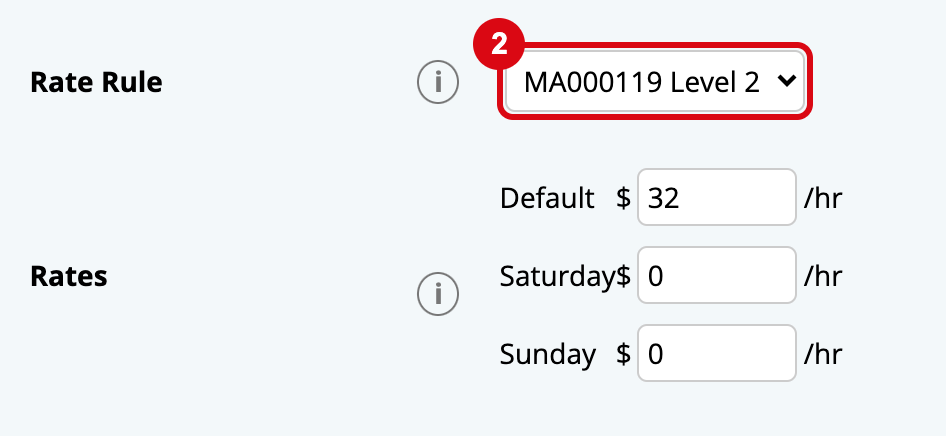
Their profile's hourly rates are then only used for shifts that no clause matches.
Put many employees on a Rate Rule at once
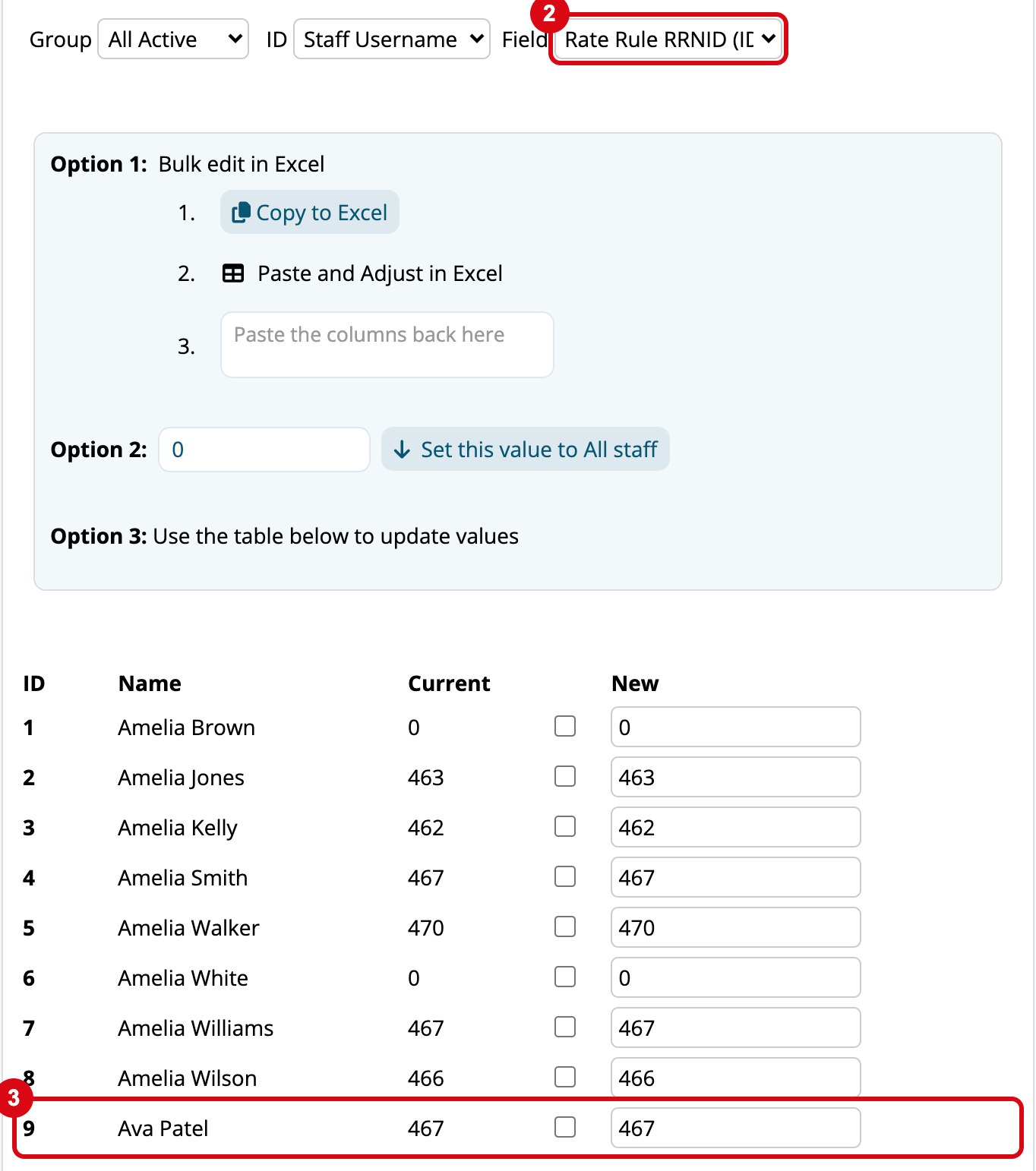
Propagate Data needs each Rate Rule's ID number, which the Rate Rules page doesn't show. Put one employee on the rule from their profile first.
- Navigate to Menu > Settings > Employees, click More Actions and then Propagate Data.
- Under Field, choose Rate Rule RRNID (ID), and under Group, the staff to change.
- Find the employee you put on the rule. The number beside them is the Rate Rule's ID.
- Enter that number for each employee to put on the rule, or use Set this value to All staff.
- Click Update.
Warning
Propagate Data saves values with little checking. Check a few profiles afterwards to be sure each has the right Rate Rule.
Update rates when the award changes
Click the pencil next to each clause, change the Rate, and click Update. The new rate is used from the next pay run you process. Do this before you process the first pay period that starts on or after the date the rates change.